Commercial concrete, poured right.
Foundations, floors, tilt-up walls, docks, parking and repairs for owners, builders and property managers, from the first stake to the final cure. Try the pour yourself: press and drag on the slab.
- 4,000 psitypical slab mix
- 0.45water ratio, or lower
- 7 daysminimum cure
Press and drag to pour
Ready to cure
- Poured
- 0%
- Concrete
- 0 cu yd
- Trucks
- 0
- Surface
- Bare steel
Six kinds of concrete work, one crew from forms to finish
From the footing to the final cure, every phase of commercial concrete under one roof.
Structure and Foundations
Footings, piers, slabs, columns, walls, tilt-up and precast.
- Foundation Walls and Footings
- Drilled Piers and Caissons
- Slab on Grade
- Elevated Slabs and Decks
- Concrete Columns and Beams
Floors, Docks and Flatwork
Warehouse floors, docks, parking, sidewalks, curbs and ramps.
- Warehouse and Industrial Floors
- Distribution Center Floors
- Cold Storage Floors
- Polished Concrete
- Floor Grinding and Leveling
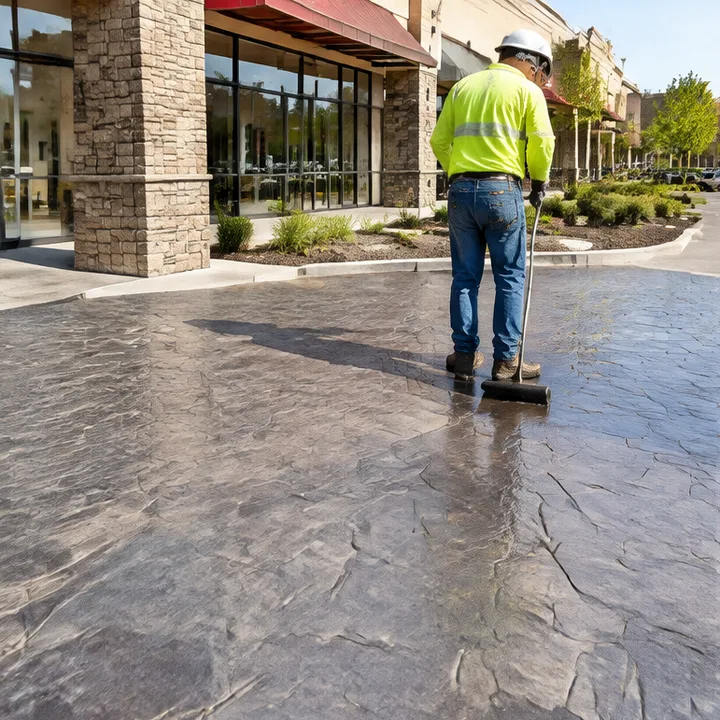
Decorative and Architectural
Stamped, colored, stained, exposed aggregate and architectural concrete.
Browse this groupRepair, Coatings and Restoration
Concrete repair, coatings, sealers and parking structure restoration.
- Concrete Repair
- Crack Repair and Injection
- Slab Lifting and Leveling
- Joint Sealing and Filling
- Concrete Resurfacing
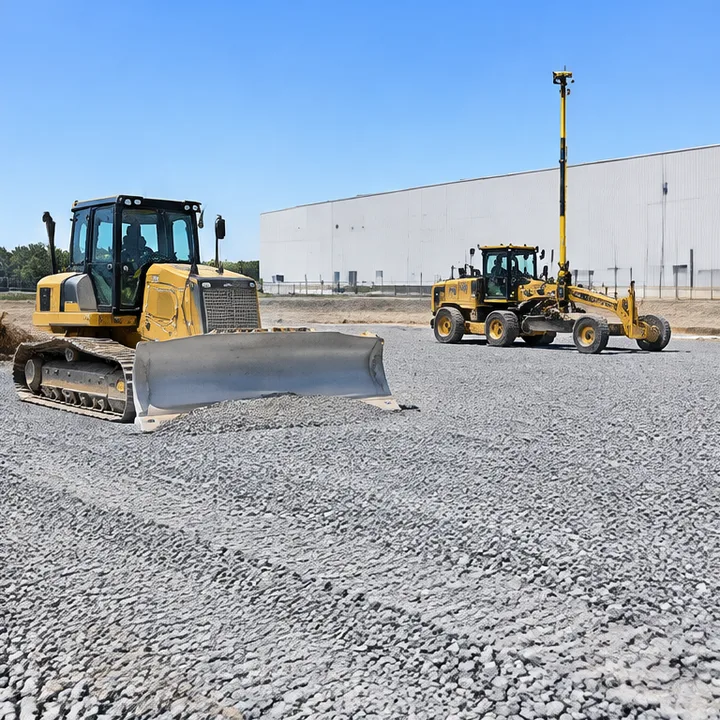
Sitework and Site Concrete
Grading, drainage, vaults, barriers, truck courts and pole bases.
- Site Prep and Grading
- Excavation and Subgrade
- Storm Drainage and Catch Basins
- Trench Drains
- Utility Vaults and Manholes
Cutting, Demolition and Specialty
Sawing, coring, demolition, pumping, curing, testing and weather work.
- Concrete Demolition
- Concrete Sawing and Cutting
- Core Drilling
- Wall Sawing and Slab Removal
- Hydrodemolition
Survey and subgrade
Stakes go in, the ground is cut, filled and compacted, and the base is graded to a tolerance you can measure with a laser. Every later step depends on this one.
Typical: compaction to 95 percent of standard Proctor
Forms and steel
Edge forms are set to line and grade, the vapor barrier goes down and rebar or fibers go in on chairs, with joints laid out on the plan before a drop of concrete arrives.
Typical: 3 in cover over steel cast against earth
Pour and place
Trucks arrive on a planned rhythm. The chute or pump places the mix, vibrators settle it around the steel and the screed strikes it off to elevation.
Typical: a truck every 10 to 15 minutes
Float, trowel and finish
Bull floats close the surface, bleed water leaves, then power trowels and hand tools bring it to the finish: broom, hard-troweled, stamped or polished.
Typical: finishing starts when the sheen leaves the surface
Cure, saw and protect
Curing compound goes on, joints are sawn in the first hours and the slab is protected from weather and traffic until it reaches its strength.
Typical: saw within 4 to 12 hours, cure 7 days
- 1Survey and subgrade
- 2Forms and steel
- 3Pour and place
- 4Float, trowel and finish
- 5Cure, saw and protect
Concrete is a science, and we keep the numbers honest
- 4,000psithe usual strength of a commercial slab mix
- 28daysto reach the strength the engineer designed for
- 0.45the water-cement ratio durable slabs stay under
- 70%of that strength is typically reached by day 7
Break a test cylinder
This is how strength is proven. Pick a mix and an age, then crush the cylinder and read the gauge.
0.0kips
- Strength
- 0 psi
- Design strength
- 0 psi
- Result
- Ready
A lab breaks mixes above the specified strength so they pass. Press the button to see this one.
What owners and builders ask for most
Pick any service for scope, specs, process and answers.
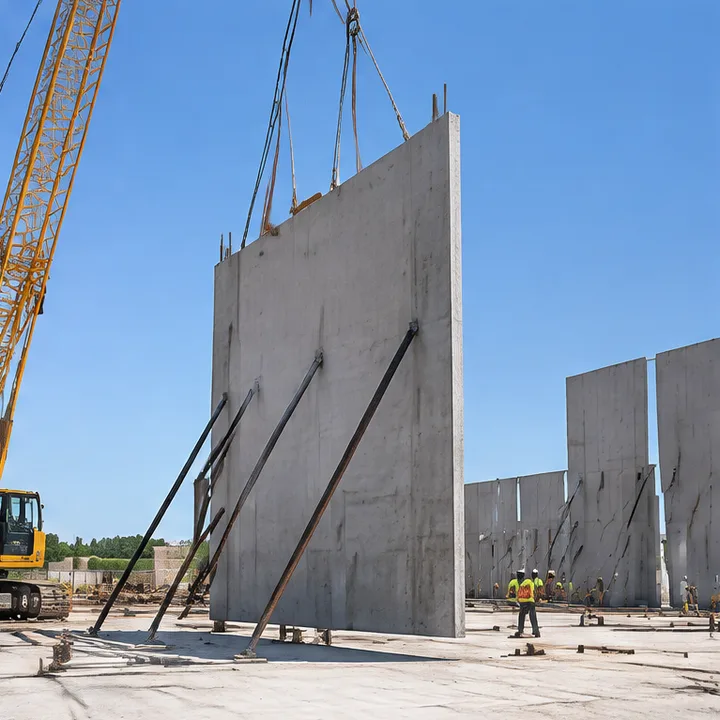 Structure and FoundationsTilt-Up Concrete WallsWall panels cast flat and lifted into place
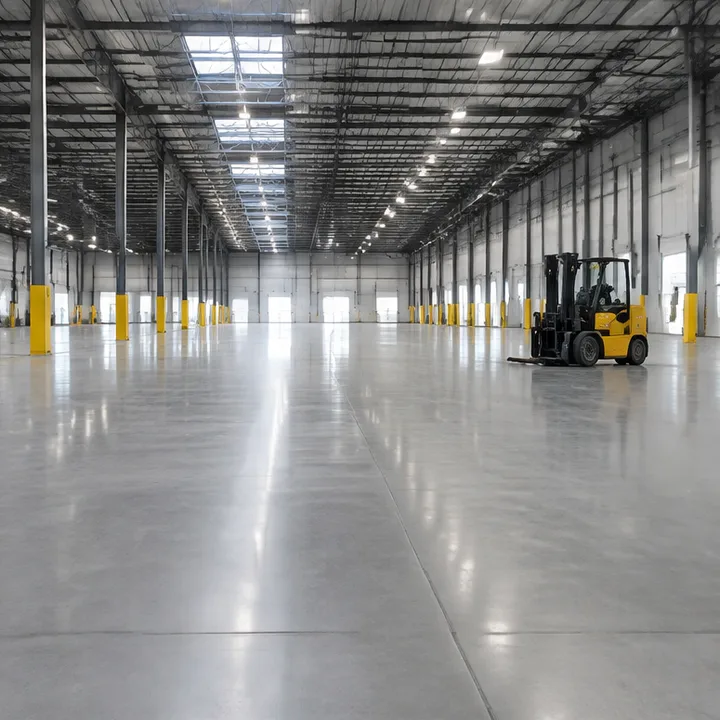 Floors, Docks and FlatworkWarehouse and Industrial FloorsFlat, tough floors for forklifts, racks and constant traffic
 Floors, Docks and FlatworkPolished ConcreteA hard, glossy floor made from the slab itself
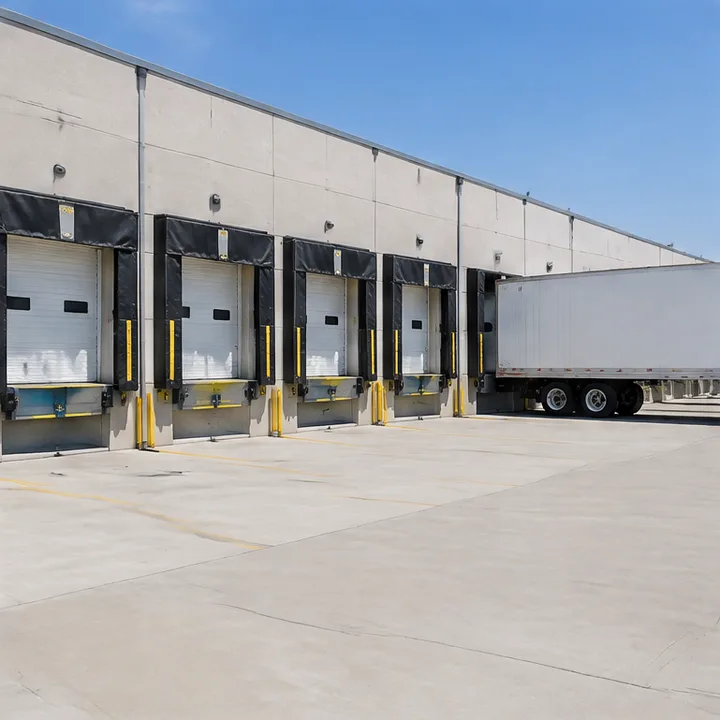 Floors, Docks and FlatworkLoading Docks and ApronsDock pads that take the beating of trucks and trailers
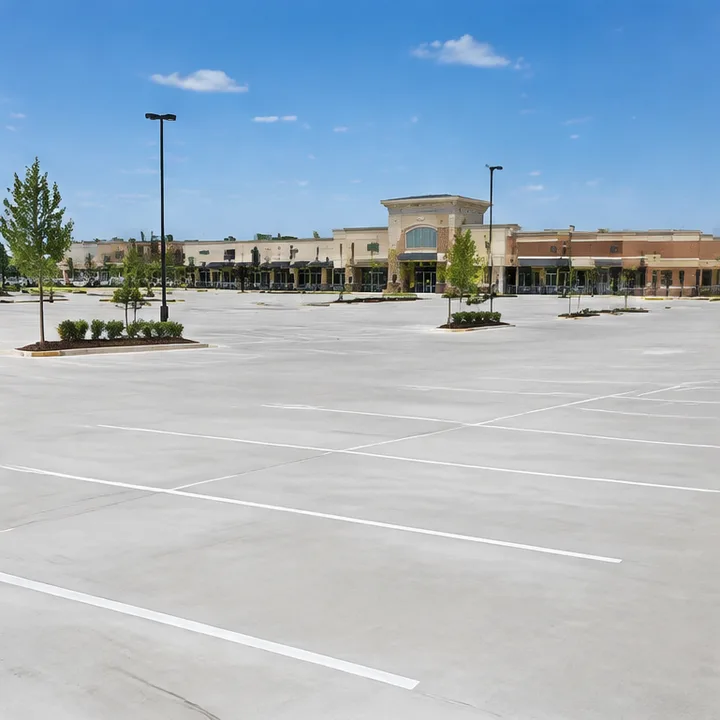 Floors, Docks and FlatworkConcrete Parking LotsLong-lasting lots that stay flat
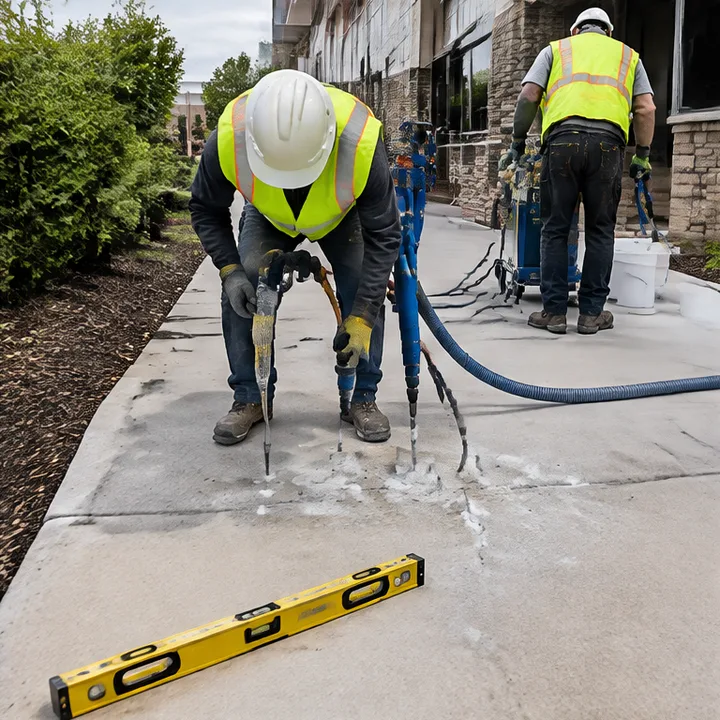 Repair, Coatings and RestorationSlab Lifting and LevelingSunken slabs raised back to level in hours
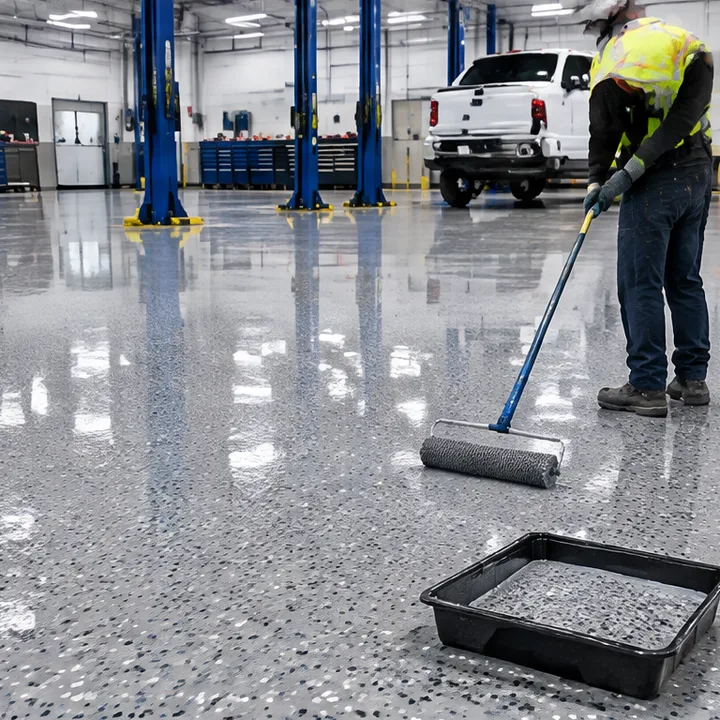 Repair, Coatings and RestorationEpoxy Floor CoatingsSeamless, easy-to-clean floors with bite
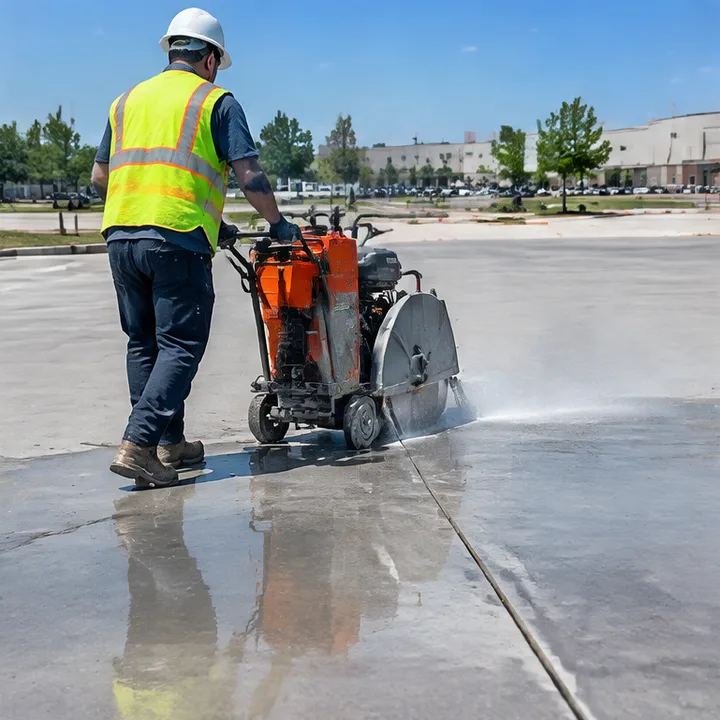 Cutting, Demolition and SpecialtyConcrete Sawing and CuttingClean straight cuts in slabs, walls and pavement
No service matches that search. Try a shorter word.
Free tools for planning a pour
Yards and trucks, mix strength, cure time and joint layout, with the same rules our crews use.
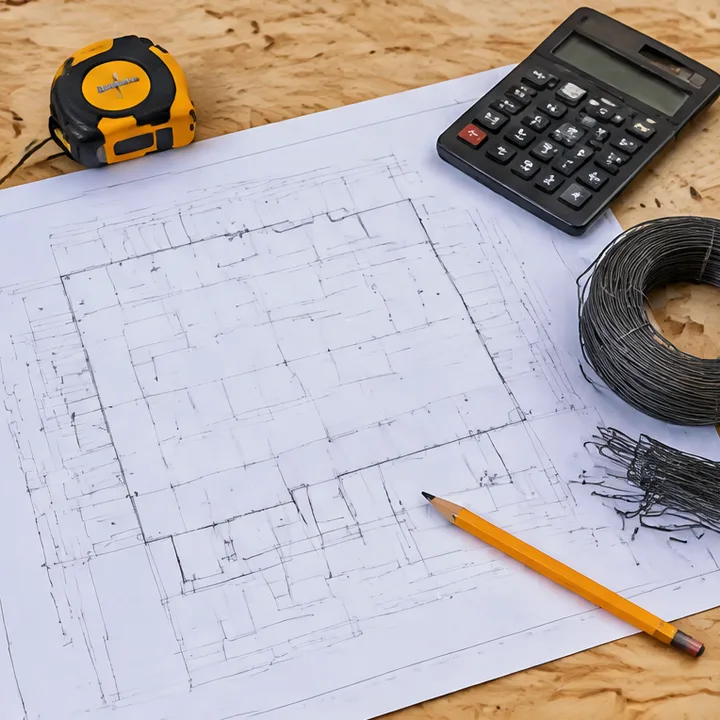 Pour PlannerHow many yards, how many trucks, how much steel
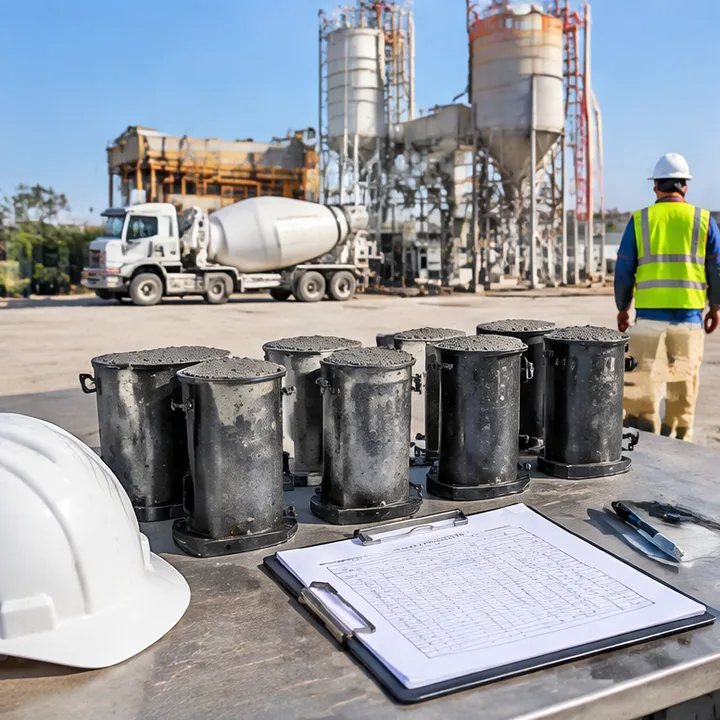 Mix ChooserThe strength, water ratio, slump and air for your job
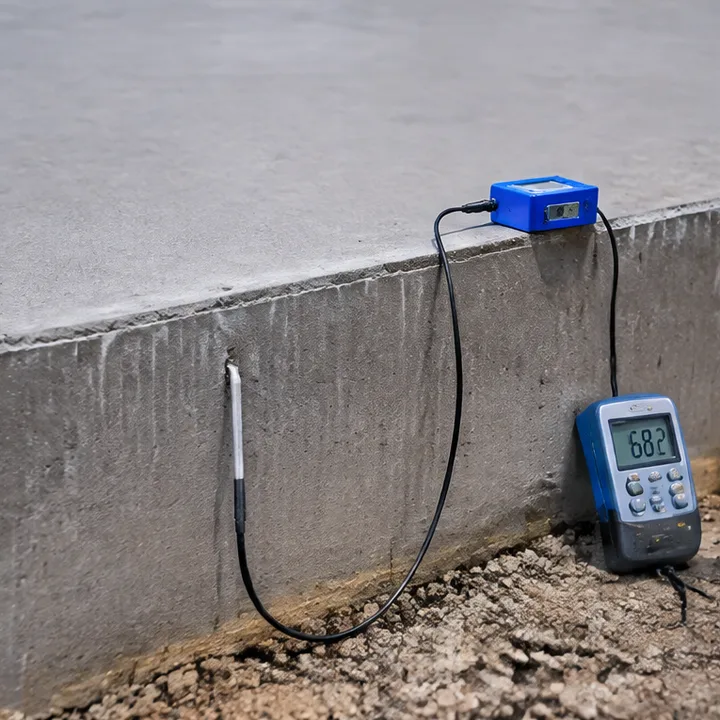 Cure ClockStrength by the day, at the temperature you will pour in
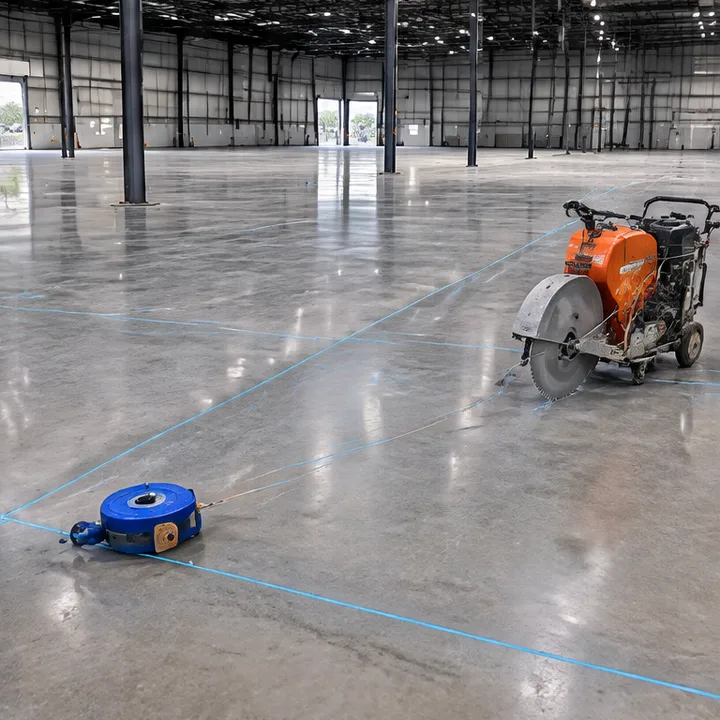 Slab Joint PlannerWhere the saw cuts go, how deep, and when
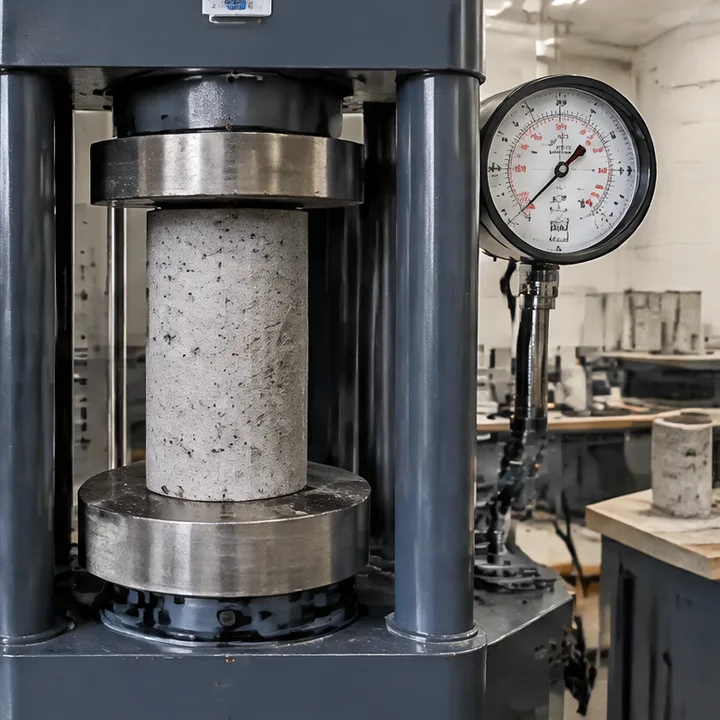 Cylinder Break TestCrush a test cylinder and watch the gauge
Find your city on the map
Cities across the country each have their own page, with the frost depth, ground and pour season that shape concrete there.
Built for owners, builders and managers
- Commercial only
We build for owners, builders and managers: warehouses, retail, offices, hospitals, schools and sites, not driveways.
- Numbers you can check
Quantities, thickness, strength and joint spacing are written down, so bids compare line by line.
- Tested on the truck
Slump, air and temperature at the chute, cylinders cast and broken, results shared with you and the engineer.
- Planned around you
Phased pours, night work and quick-set repairs so stores, shifts and tenants keep running.
- A weather plan
Heat, cold and rain are planned for in the mix, the protection and the schedule, not discovered on the day.
- Forms to finish
One company handles base, forms, steel, placing, finishing, sawing and curing, so nothing falls between trades.
From the first call to the final cure
- 1Walk the site
We look at the ground, the drawings, the access and the schedule, and list the questions that decide the price.
- 2Price it plainly
You get quantities, scope, schedule and exclusions in writing, with options priced separately.
- 3Build it right
Subgrade, forms, steel, mix and joints are checked before the pour, not after.
- 4Pour and finish
A planned pour with the right crew, pump, finishers and testing on the truck.
- 5Cure and hand over
Curing, protection, joint sawing and a walk-through, so the slab reaches the strength it was designed for.
Straight answers
What kind of concrete work does Commercial Crete do?
Commercial and industrial concrete of every kind: foundations, slabs, tilt-up walls, elevated decks, warehouse and dock floors, parking lots, sidewalks and ramps, decorative finishes, repairs, coatings, sawing, coring and demolition.
How do I get a bid?
Send the form on any page or call (800) 290-5816. Tell us the city, the kind of work, the rough size and your schedule, and send drawings if you have them. A written bid shows quantities, scope, schedule and exclusions.
What does a bid include?
Scope, quantities, concrete strength and finish, joints, curing, testing, schedule and what is not included, with options priced separately so you can compare line by line.
How long does concrete take to cure?
Concrete gains most of its strength in the first week and reaches its design strength at 28 days. Cold slows it and heat speeds it up, and the Cure Clock tool shows the difference.
How do you test the concrete?
Slump, air content and temperature are checked at the truck, and cylinders are cast and broken at 7 and 28 days by an independent lab. Results go to you and the engineer.
Which cities do you serve?
Cities across the United States, starting in Middle Tennessee and reaching the Southeast, Northeast, Midwest, Texas and the West. Every city has its own page, and the map shows them all.
Let's talk concrete
Tell us about the project: the city, the kind of concrete work and when you need it. You get a plain written bid, and a person answers the phone at (800) 290-5816.