How Thick Should a Commercial Slab Be?
Thickness is the cheapest strength you can buy and the most expensive thing to fix later. The right number depends on what will roll, stand and stack on the slab, and on the ground under it.
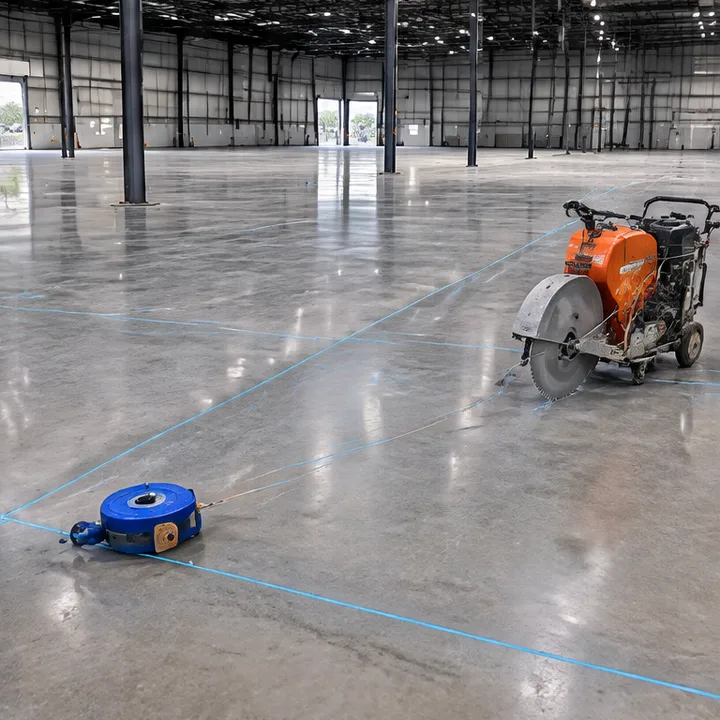
Start with the load, not the price per yard
A slab carries its load by spreading it out through the concrete into the soil. More thickness spreads it further, and a stiffer, better-compacted base helps as much as extra inches.
Rolling loads, such as forklifts and trucks, and point loads, such as rack legs and outrigger pads, are what usually decide the design. Foot traffic barely matters.
Typical thicknesses by use
These are common starting points, not design values. The engineer's drawings always govern.
- Retail and office floors: 4 to 5 inches
- Warehouse floors with forklifts: 6 to 8 inches
- Racked storage and heavy point loads: 7 to 10 inches, sometimes with thickened areas
- Loading dock aprons and truck courts: 8 to 10 inches with dowels
- Sidewalks: 4 inches, 6 inches where trucks cross
- Parking lots: 5 to 6 inches for cars, 7 to 8 inches for trucks
The ground matters as much as the concrete
A thick slab on soft or wet soil still fails. The subgrade must be compacted, even and free of pockets of weak fill, and the base stone must drain.
Expansive clay, high water tables and poor fill are the usual culprits. A geotechnical report is cheap insurance on a large project.
Reinforcement and joints change the answer
Steel, fibers and post-tensioning let a slab carry load and hold cracks tight, so they can change the thickness or the joint spacing. Dowels at joints move load across them, which is why dock aprons are doweled.
Where to go next
Use the Joint Planner to see how thickness sets joint spacing, and the Pour Planner to turn a thickness into cubic yards and trucks.
Use the Slab Joint Planner
Services that go with this
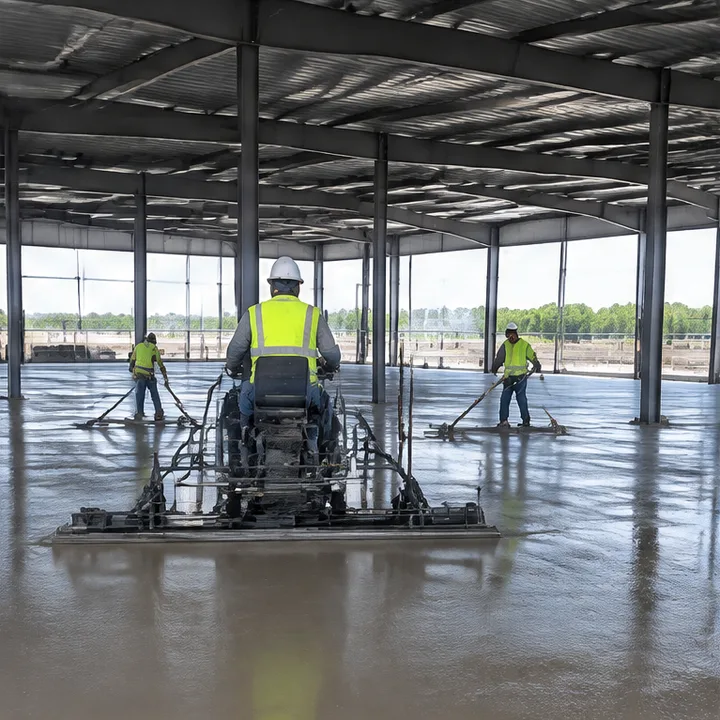 Structure and FoundationsSlab on GradeThe floor slab that everything else sits on
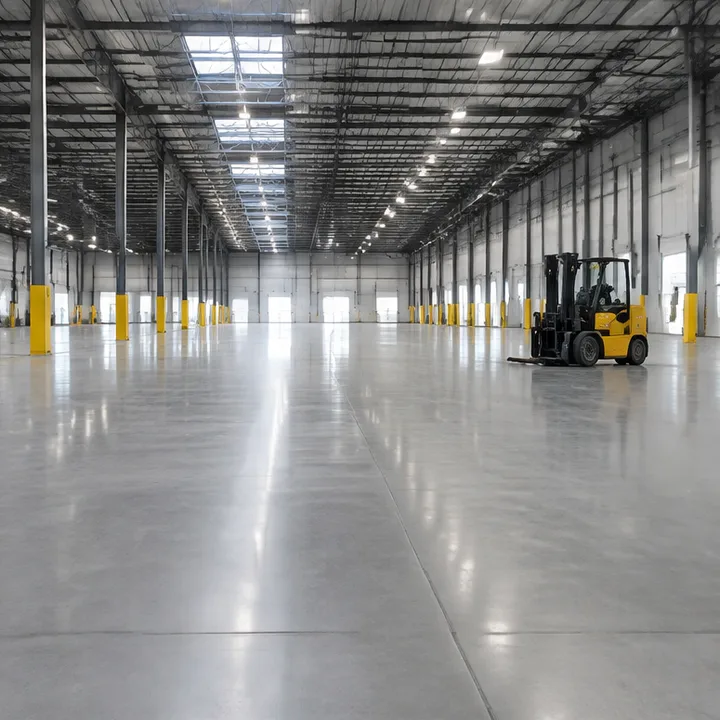 Floors, Docks and FlatworkWarehouse and Industrial FloorsFlat, tough floors for forklifts, racks and constant traffic
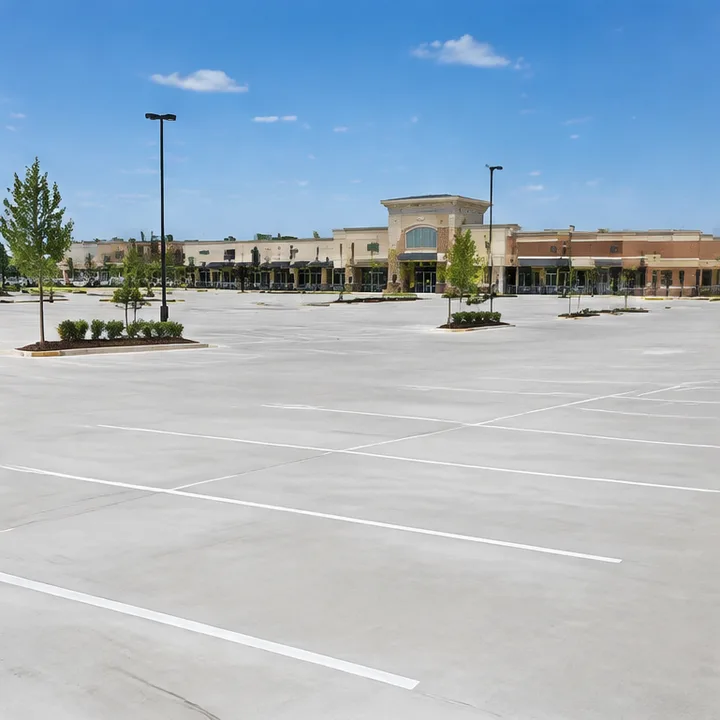 Floors, Docks and FlatworkConcrete Parking LotsLong-lasting lots that stay flat
No service matches that search. Try a shorter word.
Questions about your project?
Tell us about the project: the city, the kind of concrete work and when you need it. You get a plain written bid, and a person answers the phone at (800) 290-5816.