Pouring Concrete in Hot Weather
Heat makes concrete set faster and dry faster, and fresh slabs lose water from the surface quicker than it can rise to replace it. The result is plastic shrinkage cracking and weak surfaces unless the crew plans for it.
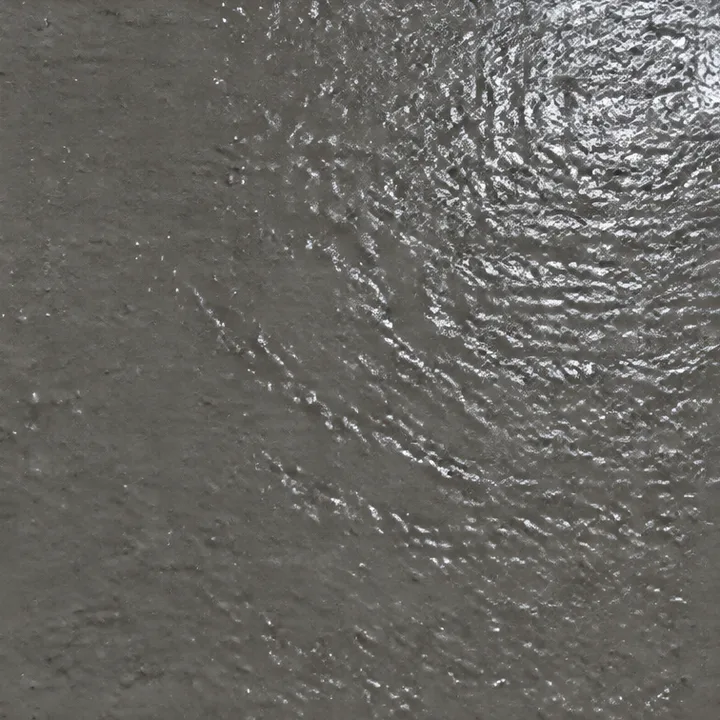
Know the evaporation rate
Air temperature, concrete temperature, humidity and wind speed set how fast the surface loses water. When the rate gets near 0.2 pounds per square foot per hour, cracking risk is high and extra protection is needed.
Keep the mix cool
Ice replaces some of the mixing water, aggregates are shaded and watered, and the truck is not allowed to sit. Many contractors set a limit around 95 degrees Fahrenheit for the mix as placed.
Protect the surface
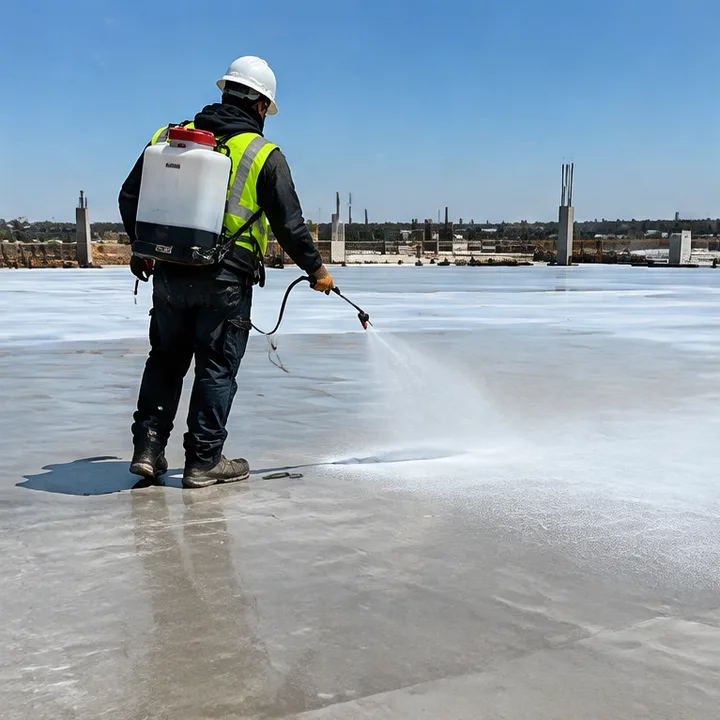
Dampen the base and forms, set windbreaks and sunshades and use fog misting or an evaporation retarder between finishing passes. Start curing the minute the slab can take it.
Pour at the right time
Early morning and night pours avoid the worst heat and give finishers more time. Summer pours often start before dawn.
What to watch
Fast stiffening, a crust on the surface, short cracks appearing while you finish and color variations are signs that the plan needs adjusting.
Use the Cure Clock
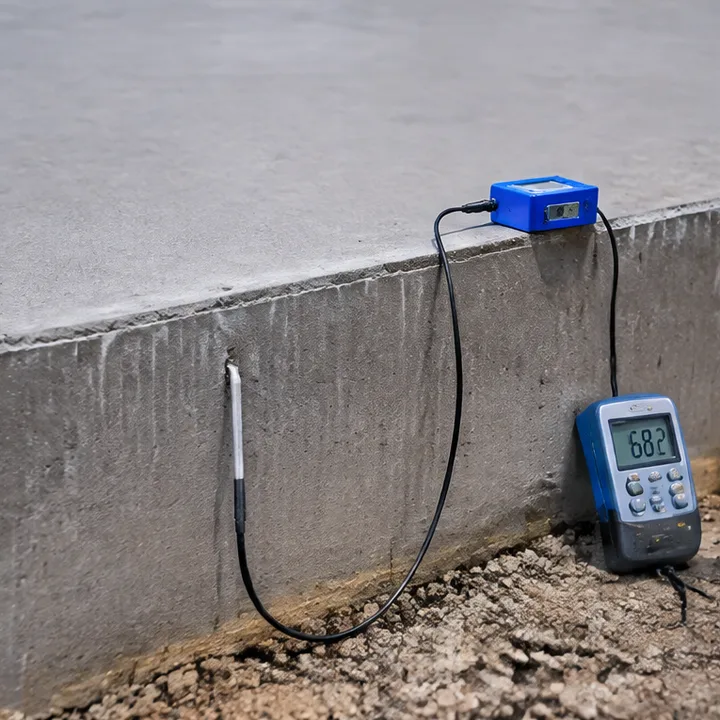
Services that go with this
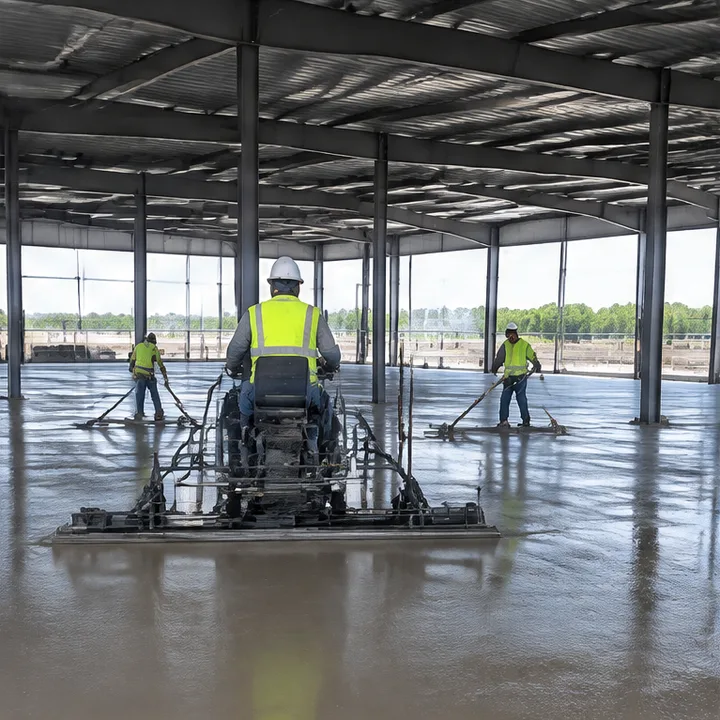 Structure and FoundationsSlab on GradeThe floor slab that everything else sits on
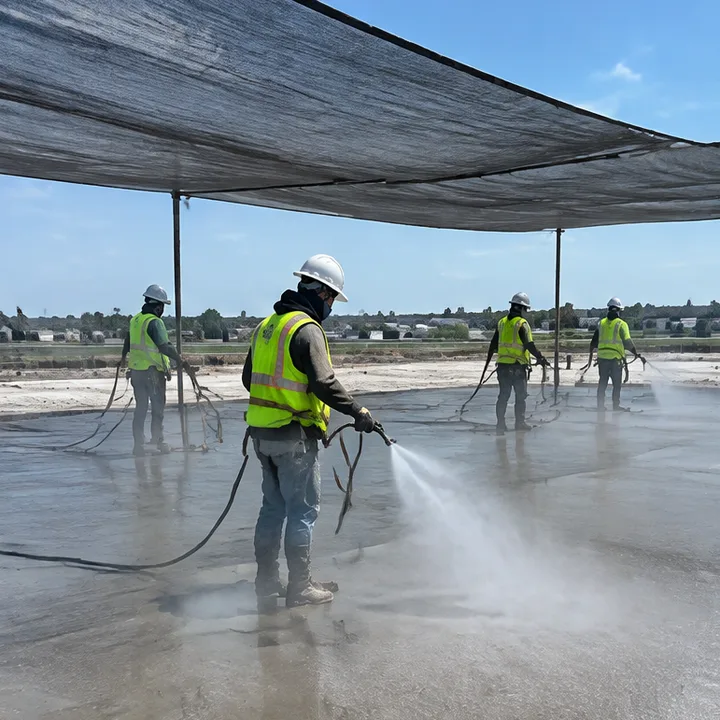 Cutting, Demolition and SpecialtyHot Weather ConcreteSummer pours without plastic cracks
 Cutting, Demolition and SpecialtyConcrete Curing and ProtectionThe step that decides how strong and durable the slab becomes
No service matches that search. Try a shorter word.
Questions about your project?
Tell us about the project: the city, the kind of concrete work and when you need it. You get a plain written bid, and a person answers the phone at (800) 290-5816.